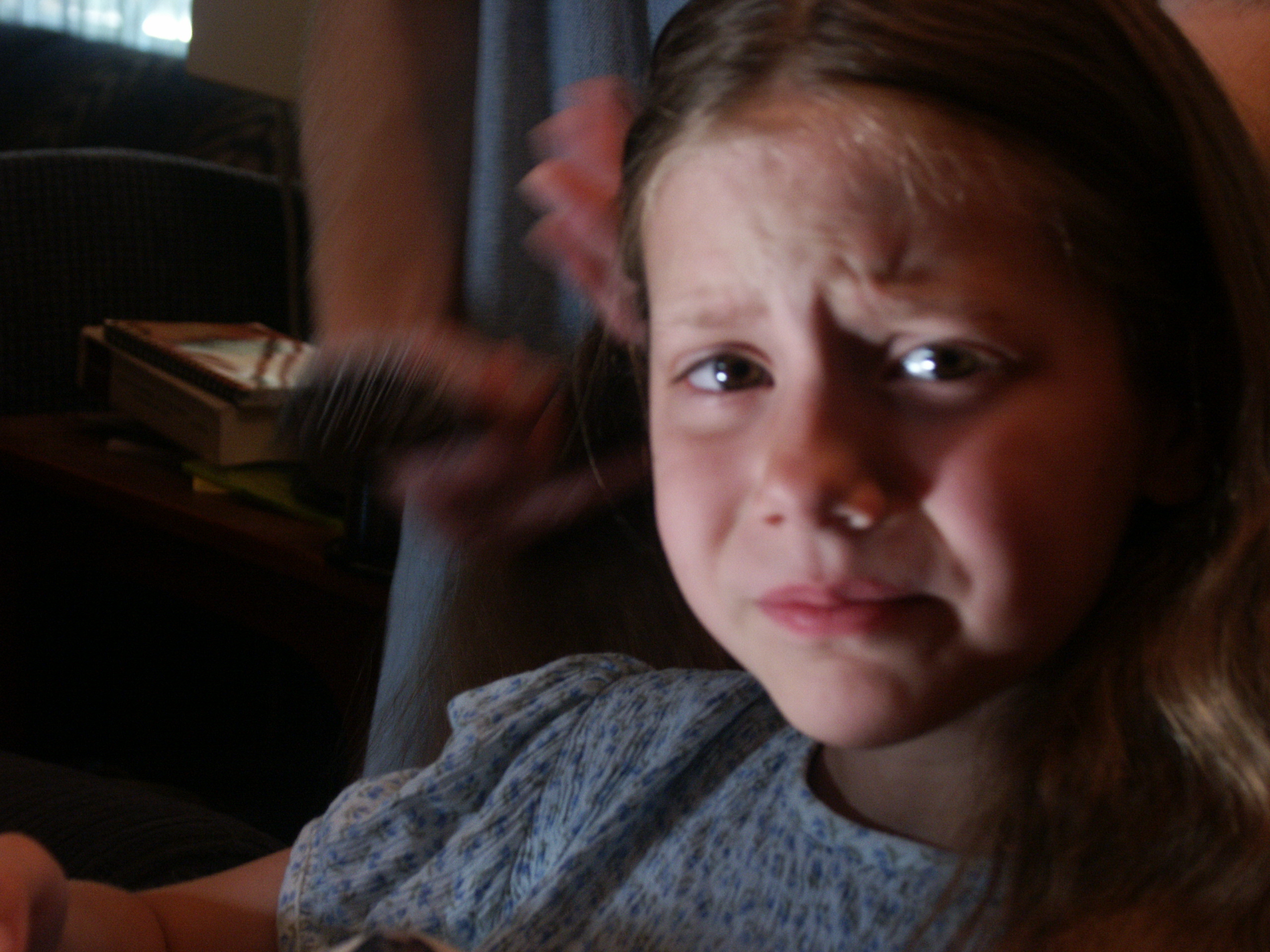
I have not read Susanna Clarke’s book, Jonathan Strange & Mr. Norrell. But AnnaLeah did. And she staged a photoshoot–portraying Mary reading through the book with various emotions passing across her face as she made her way through the book.
Today, I am getting ready to watch the mini-series based on the book with other members of my family. No matter how good it is or isn’t, it feels like AnnaLeah and Mary were somehow cheated of the opportunity to watch it. For no good reason.
But I am determined to watch it with an open heart and mind–even though it has to be without them. I imagine that AnnaLeah would prefer it that way.
(Note: Mary had not read the book yet at the time of this photoshoot.)
“Further regulations are nothing more than compounding a problem with more problems. The trucking industry itself can be the one to ensure safer highways and further correct many of the issues faced within the industry, without governmental action to impose additional regulations:
Develop and implement their own Entry Level Driver Training AND Hiring Standards
Increase driver wages which have remained stagnant for the past 25 years which add to drivers pushing for more miles in anticipation for a livable pay check
Develop a professional treatment toward their drivers, respecting the current rules in place as they relate to HOS rules, driver fatigue and drivers’ lawful rights
Stop the intimidation, harassment and retaliatory behavior against drivers to work toward ending the industry’s “Us against them” mentality
To further campaign and promote highway safety by providing educational resources directed at the general public in order to cultivate a deeper understanding and awareness for autos as it relates to sharing the road with the big rigs
As safety groups continue to play a major role in the addition of regulations placed on the industry, often these groups display a supportive approach for the drivers. Safety groups have called for better pay for drivers; they have voiced their concerns for the need of safer parking areas and appropriate rest time for drivers; they have expressed interest in the need to stop forced dispatching, causing the driver to be pushed beyond the boundaries of safety.
By all ways and means, the industry itself has been its own worst enemy. If the industry would step up and implement the solutions to the problems, would the government then have any reason to intervene on behalf of safety groups and attorneys? If the industry is so fearful of the CSA, safety ratings and interventions from the FMCSA, and is truly concerned about a driver shortage, why is it not possible for one of the world’s largest industries to create the solutions to the problems that they have allowed to continue for decades?
This industry must stop casting blame in all directions toward the FMCSA, professional drivers and even the general public, all for the sake of corporate greed. They must finally face these issues which they have generated over the years which in return, have forced the government into the equation with such actions as HOS, speed limiters and ELD’s.”
Here is another one:
“Can a reasonable argument be made using existing laws and regulations to create laws and regulations to transform this industry from a piece work pay system to an hourly based system for employee Drivers? https://www.facebook.com/TruckersUnitedUSA/posts/1578458142421756
For more interesting conversations on this topic, go to this page:
In case you did not know it, the minimum level of liability insurance, which trucking companies are required to have, is $750,000 and has not increased in over 35 years. It has not kept up with inflation as Congress intended when it originally authorized the Secretary of Transportation to set that limit.
“The Motor Carrier Act of 1935 first directed the establishment of Federal rules and regulations for interstate motor carrier operations that govern “security for the protection of the public.” Over time, both Congress and the Federal government have taken numerous actions to address the levels of financial responsibility, most recently with the recent enactment of MAP-21. The current minimum levels of financial responsibility for commercial motor carriers were established by Congressional legislation in the early 1980’s. Recently, there has been interest in determining whether the current mandated levels continue to accomplish these goals and whether victims of truck- and bus-related crashes are adequately compensated.” p. xi http://www.fmcsa.dot.gov/sites/fmcsa.dot.gov/files/docs/Financial-Responsibility-Study.pdf
As one daughter of a truck crash victim has said, “That’s $750K for each incident, not each person injured or killed in a crash. So if several families or cars are involved all those injured and all the families of those killed must share the $750K if that is all the truck company has.” http://trucksafety.org/dawn-kings-journey-2011/
In contrast, check out this DOT document which they prepared in order to determine the value of lost life and injury and its impact on rulemaking decisions: VSL Guidance-2013-2 DOT value of life .
In the fall of 2014, the Federal Motor Carrier Safety Administration (FMCSA) issued an advanced notice of proposed rulemaking in order to study, among other things, the question of whether the minimum liability level should be increased in order to more adequately compensate for lost life and injury due to truck crashes.
The Federal Government has long required motor carriers to maintain certain levels of financial responsibility, either through insurance, a bond, or other financial security, as a means to protect the public in the event of a crash. An April 2014 Report to Congress found that while catastrophic motor carrier crashes are rare, the costs for resulting severe and critical injuries can exceed $1 million; current insurance limits do not adequately cover these costs, which are primarily due to increases in medical expenses and other crash-related costs. – See more at: http://www.fmcsa.dot.gov/newsroom/fmcsa-seeks-comment-public-insurance-providers-motor-carriers-revising-minimum-levels#sthash.dQV1v0AQ.dpuf
From a study released in April 2014, FMCSA says that, “The legislative history of minimum insurance requirements for commercial motor vehicles (CMV) indicates that Congress recognized that crash costs would change over time and that DOT would periodically examine the levels and make adjustments as necessary. A variety of recent studies indicate that inflation has greatly increased medical claims costs and related expenses. In conclusion, FMCSA has determined that the current financial responsibility minimums are due for re-evaluation. The Agency has formed a rulemaking team to further evaluate the appropriate level of financial responsibility for the motor carrier industry and has placed this rulemaking among the Agency’s high priority rules. The FMCSA will continue to meet with the stakeholders, including impacted industries, safety advocacy groups, and private citizens, as it moves forward with developing a proposed rule.” http://www.fmcsa.dot.gov/mission/policy/report-congress-examining-appropriateness-current-financial-responsibility-and
Unfortunately, despite the insistence of many that this increase is necessary, the trucking industry is lobbying against it–declaring it unnecessary–and, at present, has put a rider in the THUD appropriations bill now being voted on. If the bill passes with that rider intact, then FMCSA will no longer be funded to complete the rulemaking process which has already been authorized.
What is the truth in this matter–necessary or unnecessary? That is what I would like to know. And I think that truckers and lawmakers and the public need to know this as well. And that is why I set out on a quest recently to find the answer to that question.
The support for halting the rulemaking which is coming from the trucking industry includes the Independent Owner Operators, who in particular are being told that their premiums will skyrocket if the rule were to pass. According to Jami Jones from OOIDA (Owner-Operator Independent Drivers Association),
“An increase such as the one Cartwright is proposing would cripple small-business-truckers. Currently, the national average cost for a small-business trucker insuring one truck is about $5,000 per year.
It’s virtually impossible to project what the cost would be if the minimum liability requirement were increased more than 500 percent.
For starters many insurance carriers may quit offering insurance because of the increased amount of financial resources they would have to have in place to even write the policies. Secondly, there is no straight-line increase that can be drawn. But early estimates place annual premiums at $20,000 or more for a one-truck owner-operator for a $4.2 million liability policy.” – See more at: http://www.landlinemag.com/Story.aspx?StoryId=25702#.VXoxp_lViko
In contrast, check out this opinion on the potential premium:
Additionally, I have been having online conversations with truckers and have not found any evidence to verify the validity of that $20,000 estimate. Many people in the industry pooh-pooh safety advocacy which they consider based merely on emotion. But do they hold themselves to the same standard and insist on FACTS?
I am certainly motivated strongly by emotions to be in this quest for safer roads for the long haul. But I hope that I am basing my statements and my advocacy on facts and logical reasoning. In fact, I am not content to accept at face value statements by the trucking industry which influence both those whom they represent and also lawmakers who make decisions on truck safety legislation. I am, therefore, concerned about decisions being made on matters which impact victims of truck crashes and which quite possibly may be impacted by misinformed fears.
Because I feel so strongly about getting to the bottom of this question, I have spent many hours this week trying to find out what the new premiums will actually be for truckers if the minimum liability level is eventually raised. In order to educate myself on this topic, I have spoken or emailed with:
Todd Spencer, Executive Vice President of OOIDA–the Owner-Operator Independent Drivers Association (awaiting a response from him)
National Association of Insurance Commissioners (who explained to me that as liability limits go up, rates go down. He also told me that insurance companies are required by law to file their rate tables with the state and that I should be able to contact a state department of insurance and ask for that information. He said that the rate tables would list the options for liability limits and that each level would indicate a figure which would be a multiplier–to be multiplied by the trucker’s base rate in order to find out the new premium at higher levels. I have yet to get access to these tables.)
North Carolina Department of Insurance (still have to check with the Property and Casualty Division)
Many independent owner operators are concerned that they would bear the brunt of increases — being at a disadvantage to the larger self-insuring trucking companies. FMCSA’s rulemaking addresses this issue. http://www.landlinemag.com/Story.aspx?StoryID=28110#.VXozEPlViko
Finally, I contacted FMCSA, to whom, on May 5, 2014, we originally presented our petition request for raising the minimum liability. At that time, they indicated that in order to get access to proprietary insurance information to determine estimated premiums they would have to initiate the rulemaking process–which they did in November 2014.
However, when I emailed FMCSA today to find out if they had gotten access to that proprietary information, they let me know that they did not yet have the information to estimate the increase in insurance premiums. In order to get that information, they have recently published a rulemaking entitled “Confidential Business Information,” which would “help encourage insurance companies to share some of their proprietary information” for use in the agency rulemaking process–without disclosing confidential information to the general public.
The evident lack of transparency really bothers me, especially with all of the rumors going around–rumors which are swaying decisions and actions that impact life & death matters.
Meanwhile, who pays the price for this issue being stuck in limbo? Some would claim that, “In the end, if minimum liability insurance is increased to $4.2 million, the only winners would be the trial lawyers and large motor carriers – with small-business trucking suffering an expensive, wildly burdensome and completely unnecessary mandate.” – See more at: http://www.landlinemag.com/Story.aspx?StoryId=25702#.VXo3XvlViko
Really? What about those who already bear the brunt of unexpected, unnecessary tragedy and untimely death? Aren’t they the ones that the insurance is intended to benefit?
My son was on his way to Durham tonight– a 1 1/2 hr. drive–for a professional meet-up with other programmers. His wife got a call to come and help him. Before he made it out of town, his accelerator went out of control. Fortunately his brakes functioned well and he was able to stop–in the middle of the street in busy rush hour traffic.
We are thankful it happened before he got on the expressway and that there was no crash involved, no injuries. But, despite many other 1996 Toyota Camrys which have experienced similar problems, there are apparently no recalls listed prior to 1999 for that model with that problem.
As soon as I heard what had happened, I started searching for his model online:
That reminded me of the book which I recently finished, Car Safety Wars by Michael Lemov:
“Car Safety Wars is a gripping history of the hundred-year struggle to improve the safety of American automobiles and save lives on the highways. Described as the “equivalent of war” by the Supreme Court, the battle involved the automobile industry, unsung and long-forgotten safety heroes, at least six US Presidents, a reluctant Congress, new auto technologies, and, most of all, the mindset of the American public: would they demand and be willing to pay for safer cars? The “Car Safety Wars” were at first won by consumers and safety advocates. The major victory was the enactment in 1966 of a ground breaking federal safety law. The safety act was pushed through Congress over the bitter objections of car manufacturers by a major scandal involving General Motors, its private detectives, Ralph Nader, and a gutty cigar-chomping old politician. The act is a success story for government safety regulation. It has cut highway death and injury rates by over seventy percent in the years since its enactment, saving more than two million lives and billions of taxpayer dollars.
But the car safety wars have never ended. GM has recently been charged with covering up deadly defects resulting in multiple ignition switch shut offs. Toyota has been fined for not reporting fatal unintended acceleration in many models. Honda and other companies have—for years—sold cars incorporating defective air bags. These current events, suggesting a failure of safety regulation, may serve to warn us that safety laws and agencies created with good intentions can be corrupted and strangled over time.
This book suggests ways to avoid this result, but shows that safer cars and highways are a hard road to travel. We are only part of the way home.”
Having read Michael Lemov’s book, Car Safety Wars, I am not the least bit surprised–just all the more motivated to share what I have learned from this book and to do my part in speaking out for decisions and actions reflective of a safety-minded perspective.
In fact, you have not heard the last from me about this book.
Note: I temporarily made this post private until I could verify with my son what his mechanic told him. Apparently, something (possibly an oil leak or some damage due to a blown tire a month or so ago) caused the sensor for the accelerator to go awry and thus the Sudden Unintended Acceleration that he experienced. The mechanic was able to repair the throttle. (I don’t fully understand this.)
We were thinking that it sounded like it was maybe a different issue than what we have been reading about. But is it? My son was on a city street and not going very fast so that he was able to brake safely (though the accelerator was still trying to keep going). Perhaps if he had been on the expressway and going faster, he might not have been able to stop safely. ?????
My son said that maybe there was a design flaw in that the accelerator flaw was perhaps too easily impacted by oil leaking, etc. Is that a manufacturing defect? I don’t know. What if he had died as a result or killed someone else?
After too many hours of working on “truck safety issues,” I need a breather. So frustrating.
The thought that I woke up with this morning was: “Lord, help me to know what to write and say. I can’t make things safer; only You can, so please guide me.” Then, the song came to mind, “O Lord, You are the one who goes ahead of me.” I wrote the song years ago–based entirely on verses from the Bible.
“O Lord, You are the one who goes ahead of me. You promised to be with me, never fail me or forsake me. So I will not fear or be dismayed or become discouraged, for I know, O Lord, You always go ahead of me.”
Immediately, that felt like a black hole. Didn’t want to go there. My trust in His promise/ability/whatever to protect us physically had become shaky after a truck crash killed AnnaLeah and Mary. No guarantees. I trust You, Lord. But. . .
Then, I read my Bible while eating breakfast. Like always.
Guess what I opened to. . .
2 Chronicles 32:7, “Be strong and courageous, do not fear or be dismayed because of the king of Assyria, nor because of all the multitude which is with him; for the one with us is greater than the one with him.”
With a cross-reference to: Deuteronomy 31:8, “And the LORD is the one who goes ahead of you; He will be with you. He will not fail you or forsake you. Do not fear or be dismayed.”
Gotcha! Thanks for the reminder. Again. Even if I struggle with fully trusting, it is comforting to know that He always knows my very thoughts and needs.
I have been thinking about this for some time now. Having lost my two youngest daughters, AnnaLeah (17) and Mary (13), two years ago due to a truck crash, I have thought a lot about things like drowsy driving and distracted driving. What it has gotten me to also do is think a lot about the answer to these problems.
Actually, I don’t think that there is just one answer to decreasing these behaviors that are all-too-often resulting in people dying. I think that the answer lies in a combination of personal and social responsibility.
Yes, people need to wake up and realize that they could be the next one responsible for someone dying. Not that they would have ever meant to. Not intentionally. But a behavior that could have been avoided is reckless when it leads to a death that could have been prevented.
Unfortunately, the law is not so easily changed to reflect that and so, all-too-often, there is not a legal deterrent with teeth to change behavior–in time to make a difference for someone’s loved one. Distracted driving and drowsy driving are not usually defined as RECKLESS and therefore do not receive a stiff penalty. (After all, it could be me or someone I know that could end up in jail.) I wrote about this in great detail here: https://annaleahmary.com/2014/08/law-enforcement-with-justice-for-all-balancing-truth-love/
Yet, I have also given much thought to the fact that it is foolish to put all of our eggs in one basket and depend on the individual to always do the right thing. This is why it is also important to address this as a social issue with multiple solutions, including changing laws, law enforcement, safety technology, and holding the manufacturers of products accountable for doing their part to make us all safer on the road.
I have not actually delved into the possibilities very thoroughly. But I want to throw out this question: Should the producers of electronic communication devices bear some responsibility for innovatively contributing to making them less easily abused when it comes to matters of life and death?
Remembering AnnaLeah and Mary Lydia Karth two years after their second funeral in Grand Rapids, Michigan–where they spent the first half of their lives–on June 8, 2013 (the first being in Midland, Texas on May 18, 2013). A truck crash ended the chance for AnnaLeah and Mary to make new memories. But it cannot take away our memories of them.
In this video, our pastor shares his perceptions of AnnaLeah and Mary as he had come to know them in the months before those memory-making opportunities came to an end–shared with our family and friends as we said a final farewell here on earth to Mary and AnnaLeah.
Photos and video clips of Mary & AnnaLeah accompany the sermon at Mt. Olive Lutheran Church by Pastor John Drosendahl from North Carolina, who would have been confirming Mary in late May or early June. It ends with a video clip of AnnaLeah at her confirmation on December 28, 2008, confessing her faith, “…and I believe that I, and all true believers, will one day join Him in heaven.”
Hardly a day goes by without everyday occurrences bringing AnnaLeah and Mary to mind. Take yesterday for example. . . We went rock hunting at an “emerald mine” in North Carolina. It was great fun and I might have even found a small emerald in the rough. I had the advantage of having done that sort of mining in a sluice before as a teenager when I found a ruby (now in my ring) in Cowee Valley, North Carolina.
Yesterday’s experience reminded me of the time our family (with only the youngest AnnaLeah, Caleb, & Mary still living at home) went agate hunting in Minnesota in the Fall of 2012–not too long before we lost Mary and AnnaLeah in May 2013. They had humored me and spent Sunday afternoon doing rock hunting with me on Lake Pepin because it was something I had done as a child and hadn’t done in years. I am so glad I have those memories.
Mary, for some reason, always had to take a photo when she found a dead animal on the ground. In fact, that is how she found the Beanie Baby bear on the shores of Lake Michigan–looking for a dead fish that had been washed up on the shore. (https://annaleahmary.com/bears-adventure-with-mary/ )
Memories of times gone by, of experiences shared, of expressions and habits and unique characteristics of those we have come to know and love. . . those can never be taken away from us. Though thoughts of Mary and AnnaLeah may stir up bittersweet feelings, I am grateful for their place in my heart and for the opportunity they had to live–here on earth and forever.
Feel free to jump in the conversation. I think that I will need to chew on this one for awhile and figure out where to go next with this.
Check out Tilden Curl’s (an independent owner-operator trucker) thoughts on Minimum Liability Insurance and see what you think: Tilden Curl Paper on Trucker Insurance
My parents grew up in a relatively small town. After they married, they moved to a bigger city. But my dad’s brother married my mom’s sister, and then my aunt and uncle took over a dairy farm which was in the family. For years, my family drove an hour north on many Sundays of the year to have a big family meal with two sets of grandparents, aunts, uncles, and lots of cousins.
I often spent vacations there, including a few weeks in the summer when I helped with the haying, feeding the chickens, gathering eggs, playing in the hayloft, cutting the big country lawn, chasing the cows out of the cornfield, repairing the fences, and picking strawberries from the patch.
Now it is no more. For one thing, the government bought them out to put an expressway through the old farm. They moved into a new house which they built nearby next to the family sugarbush. These days, it seems odd to shop at a major grocery store where I used to pick apples, explore old family outbuildings, bale hay, and hide in the tall, waving grass.
Two of their sons–my double cousins–bought some property a few miles away and managed a dairy farm of their own. They took out some loans to build a new barn and get new milking equipment. It got to a point where it was no longer affordable to run the small family dairy farm and make a living wage.* They sold the cows. And now they have sold the farm. An era is over.
I thought about all of this, on a recent trip “back home”, as I reflected on the plight of small trucking companies and independent owner-operator truck drivers. Are the costs of owning a company and the pressure to drive many miles creating a situation where they won’t be able to stay in business?
Frequently, I hear that changes of one kind or another in the trucking industry–in order to improve safety (i.e., reduce crashes, injuries and deaths)–will result in increased costs for the trucking companies. I hear that it will put them out of business.
Is this true? According to whom and based on what information? If it is true, then does something need to change in the trucking industry itself in order to allow for the beneficial work, which trucking provides, to continue but to also allow for truckers to make a decent living wage–without jeopardizing their health and the safety of travelers on the roads?
Will this someday be an era that is over, or can we fix the problems for the benefit of all? Who pays for Safety? And can we figure out how to fairly and logically spread the increased costs around? The alternative seems to be unacceptable: Forget safety and let the cost be spilled blood.
(* I might not have gotten all of the details of the family farm history exactly correct, but I hope you can see the picture that I am trying to paint.)
Cost of Electronic Logging Devices: http://www.vdoroadlog.com/products/electronic-logging-devices-eld/roadlog-eld/ “As you probably know, the fees for other manufacturers’ electronic log systems can add up to thousands of dollars in just a few years time, and that’s a real roadblock for many Owner Operators. RoadLog is available with no fees and no monthly contract.”
OOIDA contends that an increase in insurance would be a death nail for the small businesses that comprise over 90 percent of the trucking industry.
In response to OOIDA’s comment about “fewer than one percent,” our son Peter made this observation prior to our meeting with FMCSA on May 5, 2014,
The 1% issue is at best a red herring. Refusing to raise a limit because such a small percentage reach the limit only indicates that the increase in cost should be minimal. It can’t be both ways, either this increase should raise the cost of doing business or the effect should be minimal.
This isn’t life insurance where all the money is always paid out. Nor is this homeowner’s insurance in which you have a set amount of house that can be destroyed. This is liability insurance in which the amount paid out is based on the amount of damage being done. If such a small percentage of claims reaches the limit, then greedy lawyers, increased costs, and mythical “windfall” payments are all proven absurd or irrelevant.
We are a 23 truck fleet and carry 25 million in liability insurance. We carry that much to protect not only us but our customers. The argument that only 1 % of the claims exceed the current threshold for insurance makes no sense. You carry insurance to cover you no matter what happens. 1 % exposure is too much. The fact that it seldom happens makes the coverage cheap. The actuaries price according to probability. I don’t believe that this coverage will be cost prohibitive unless the carrier has a dismal safety rating in which case they shouldn’t be in business. When carriers don’t carry enough coverage the expose responsible carriers, shippers and the general public. We need responsible carriers, pricing their services correctly to cover all costs and excepting responsibility for the liability created by their business. Skirting this liability and charging for services is deceptive to shippers and puts the public or state at financial risk in the form of a claim that is part of a service they get no remuneration for. When you provide a service, charge fees and profit you must also be responsible financially which means carrying adequate insurance.
“. . . many of the truck drivers/companies which I see making comments complain about how the premiums will skyrocket. But on what are they basing that opinion?
John Lannen, executive director of the Truck Safety Coalition, has shared background information with us which he has gathered from numerous sources, presentations, and conversations regarding the economics of additional insurance coverage for motor carriers. It turns out that the first million dollars’ worth of trucking insurance is the most expensive and each incremental amount is cheaper. . . . ” (For more details, go here: https://annaleahmary.com/2015/06/trucking-minimum-liability-insurance-trucker-wages-a-facebook-conversation/ )
The Cartwright Amendment, which would allow FMCSA to continue the process of updating trucking minimum liability insurance–to protect both trucking company and crash victims–was defeated in the House today:
We were surprised and overwhelmed and grateful to receive a letter from the Georgia Regents Tissue Donors Services today. They were letting us know that they had received a card from one of the many recipients of Mary’s donated tissues. She was thanking us for the gift which was given to her.
This is what her letter said:
April 16, 2015
Dear Donor Family,
I just wanted to let you know how sorry I am about the loss of your loved one and how grateful I am to receive the beautiful gift of their tissue. This gift means a lot to me because it will allow me to continue the activities that I love and that make my life meaningful. I injured my knee skiing, which is one of our favorite family activities.
The tissue I received replaced my ACL so that I can ski and hike again. These activities are very important to me and my family because we once shared them with our older son who was killed in a car accident while he was attending college. He was not a donor, but the other boy killed in the same accident was a donor, and we learned about the importance of this program through his generous gifts.
We understand how difficult it is to lose a beloved member of the family and thank you again for honoring their wishes at such a difficult time. Your family member and your family are in my thoughts and my hope is that you are able to find moments of peace and comfort, especially knowing how their death has made a positive impact on others’ lives.
Your loved one will always be part of me, just as my son will always be in my heart, and for that I will always be grateful.
Sincerely,
Christine
I hope that she is able to learn that it was Mary who gave her that gift and that she will come to know Mary through our recorded memories of her.
The letter which we received today from Georgia Regents Tissue Donor Services. . .