I have become aware of four SCHOOL BUS underride crashes since November:
Hmmm, I detect a pattern here.

 What he likely saw was a side skirt for fuel savings ($).


NHTSA has finally released the report from the side underride study which they commissioned Texas A&M to do in 2016-2017. Here is the press release: https://www.nhtsa.gov
The study: Computer Modeling and Evaluation Of Side Underride Protective Device Designs
More later on our analysis of the research.
Knee-jerk reaction: I am glad that they finally proceeded with technical studies on side underride. But countless lives have been lost since 1969 when DOT announced that they intended to extend underride protection on the sides of large trucks after technical studies were completed.
It is high time for someone to act responsibly. Either Senator Thune can respond and move the STOP Underrides Bill forward, or NHTSA can act on its own and do supplemental comprehensive underride rulemaking. Either way, many lives will be saved.
If they refuse to act appropriately, who should bear the blame for continued preventable underride tragedies?

So why has the underride problem — known about for decades — not been adequately addressed? It does not fit into traditional Public Health injury prevention categories such as driver behavior, air bags, seat belts or car seats. It has fallen between the cracks because it does not properly fit into traditional Occupant Protection classifications.
Underride protective devices are meant to protect the occupants of passenger vehicles, but they are not installed in or on the passenger vehicle. They are (or would be if they were mandated) installed on commercial motor vehicles, but they do not protect the occupants of commercial motor vehicles.
The owners of commercial motor vehicles receive no benefit from underride technology. In fact, it has generally been their perspective that it would cost them far more than the risk that they would avoid, because, if they meet the federal underride standard, then they have no liability for deaths and injuries which occur when cars go under their trucks. So, why would they bother to install this equipment? TRANSPORTATION RESEARCH CIRCULAR E-C117 The Domain of Truck and Bus Safety Research, pp. 133-135
Beyond that, at least some in the industry have made the claim that the manufacturer has no duty to protect non-occupants — that is, occupants of vehicles which collide with the commercial motor vehicle:
The Mieher court made a critical distinction between its holding and other cases where Illinois courts have held that vehicle manufacturers owe a duty to their vehicle’s occupants to manufacture a vehicle in which it is safe to collide. In such cases, the courts have held that a manufacturer can be liable for defects in its vehicle that cause injuries over and above those that would have occurred from the accident but for the defective design. This is commonly referred to as the “enhanced injury,” “second collision” or “crashworthiness” doctrine. In these cases, after the initial impact, occupants of a vehicle sustain enhanced injuries due to alleged defects in the vehicle.
In Larsen v. General Motors Corp., 391 F.2d 497 (8th Cir. 1968), the court held that injury-producing impacts are “foreseeable” and, therefore, a manufacturer has a duty to design its vehicle to avoid subjecting its user to an unreasonable risk of harm. The Mieher court, however, refused to expand the “foreseeability” rule set forth in Larsen to find that a vehicle manufacturer owes a duty to non-occupants of its vehicle. The Mieher court explained that the foreseeability rule was not “intended to bring within the ambit of the defendant’s duty every consequence which might possibly occur.” The Mieher court logically explained that “in retrospect almost nothing is entirely unforeseeable” and, therefore, vehicle manufacturers do not have a duty to design vehicles to prevent injuries to non-occupants who collide with their vehicles. Thus, following Mieher, a plaintiff could bring a claim for enhanced injuries against the manufacturer of the vehicle in which he was riding, but could not bring a claim against the manufacturer of the vehicle with which his vehicle collided. Illinois vehicle manufacturers have no duty to protect non-occupants who collide with their vehicles
See where that leads. . . no liability. No responsibility for protection of the vulnerable motoring public who is daily at risk of underride upon collision with commercial motor vehicles due to the geometric mismatch between truck and car bumpers.
The problem has, in fact, been studied by the NHTSA, as described in that same article,
In fact, in looking at the history of the federal regulations, there is evidence that rear underride guards may not even decrease the risk of injury to occupants of vehicles that collide with the rear of tractors and trailers. The NHTSA began to study the rear underride issue in an attempt to improve underride protection for passenger car occupants as far back as 1967. 32 Fed. Reg. 14278 (10/14/67); see also NHTSA Docket No. 1-11. In 1971, however, the NHTSA abandoned its initial efforts after reviewing accident data and evaluating costs. It determined that the benefit from underride guards was not commensurate with the cost of implementing a standard. In fact, subsequent studies showed that rigid underride guards increased deceleration forces on the colliding vehicle and actually increased the risk of injury to occupants. See, e.g., 46 Fed. Reg. 2136, 2138 (1/8/81). As a result, the NHTSA began to perform testing in an effort to identify a guard that would absorb a sufficient amount of energy during impact without increasing deceleration forces. The NHTSA, however, estimated that only between four and fifteen lives per year would be saved even with this new type of guard. Illinois vehicle manufacturers have no duty to protect non-occupants who collide with their vehicles
Two problems which I have with that are:
Along that line, check out this very enlightening 2010 article by Safety Research & Strategies, Inc.: Are Rear Underride Guards Overrated?
Also, read this discussion of the deceleration forces controversy: Urgent Underride Discussion of Deceleration Forces/High Speeds. Don’t Dawdle.
My conclusion, therefore, is that Underride Protection has not previously been categorized as a Public Health Injury Prevention or Occupant Protection issue. Traffic Safety professionals have apparently turned a blind eye to the problem (whether out of ignorance or helplessness, I don’t know) and left it to the trucking industry to deal with. The bottomline is that: No one has been able to effectively stick up for the occupants of passenger vehicles who are at risk of going underneath large trucks and experiencing life-threatening injuries — despite the fact that promising technology has been and continues to be suggested.

It is high past time for underride to get the attention it deserves. Certainly underride victims themselves, for the most part, are not still around to speak up. Had our car rear-ended a truck in the normal fashion, I would be one of those victims myself — rather than my daughters AnnaLeah & Mary — and so I would not be here to uncover and expose the facts.
Perhaps we need a Public Health professional to be appointed as National Traffic Safety Ombudsman — someone who has a visible role and can serve as a vigilant voice to advocate for vulnerable victims of vehicle violence, in this case the very violent Death By Underride. Let this person serve on the Committee On Underride Protection which the STOP Underrides! Act of 2017 mandates be established in order to facilitate effective collaboration to solve the underride problem.
Just ask those who have already lost a loved one because of misconceptions or outright resistance. I’m sure they might tell you, “Please don’t dawdle. Preventing underride is an urgent matter!”

Other posts on Public Health & Underride:
Just read a great article, Public Health’s Contribution to Motor Vehicle Injury Prevention, and sent an email off to the author, Dr. Patricia F. Waller — only to find that she died in 2003. Wish I could have met her and strategized with her.
Some excerpts:


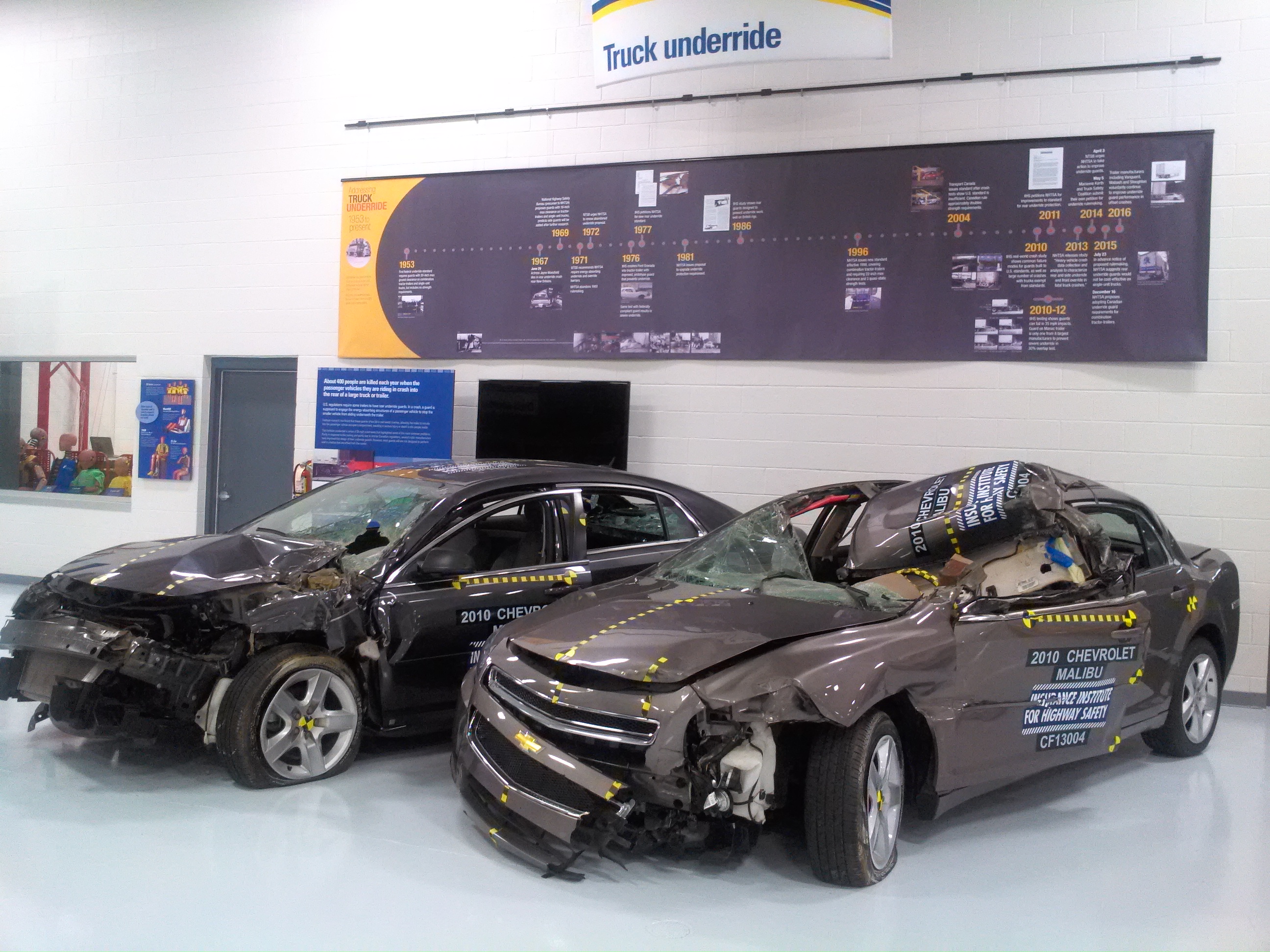


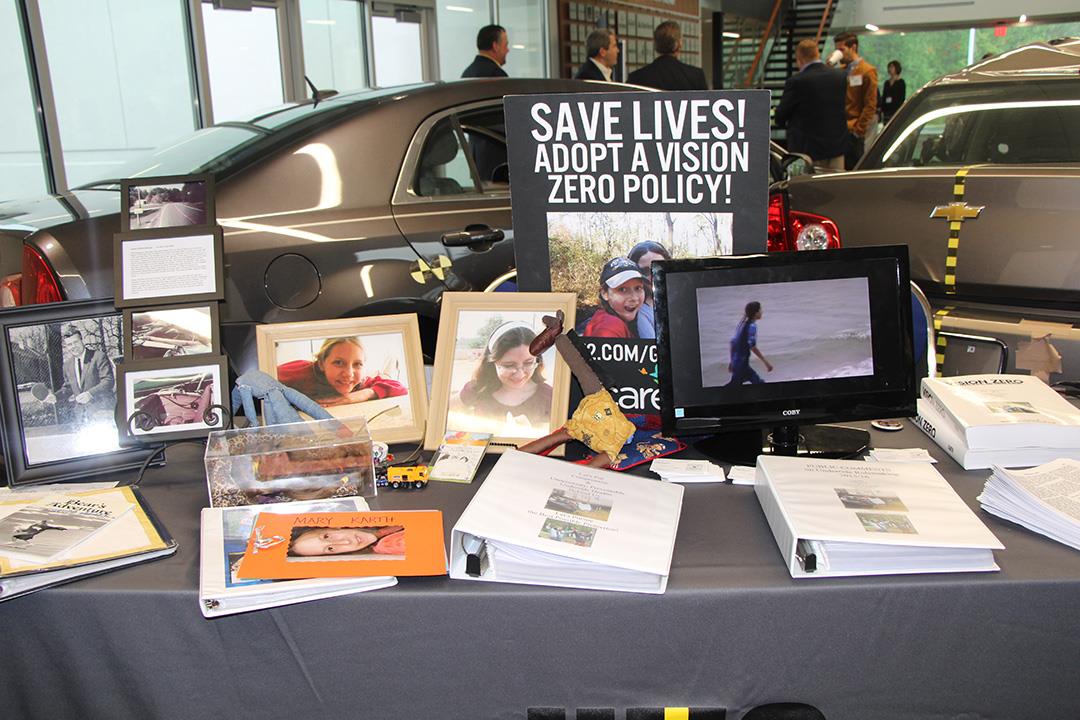


The theme of the 2018 National Public Health Week’s final day was, Advocating for Everyone’s Right to a Healthy Life. The School of Public Health at the University of Michigan chose that day to publish the article, Advocating for Transportation Safety: Solving a Major Public Health Problem Is a ‘Winnable Battle’.*
Advocating for Transportation Safety: Solving a Major Public Health Problem Is a 'Winnable Battle' @PublicHealth @CDCgov @AmerAcadPeds @CDCDirector @RWJF @AmerMedicalAssn @AMJPublicHealth @AmJPrevMed @AAAMFeed @IIHS_autosafety #NPHW https://t.co/kjRDpD0khC
— Marianne Karth (@MaryandAnnaLeah) April 6, 2018
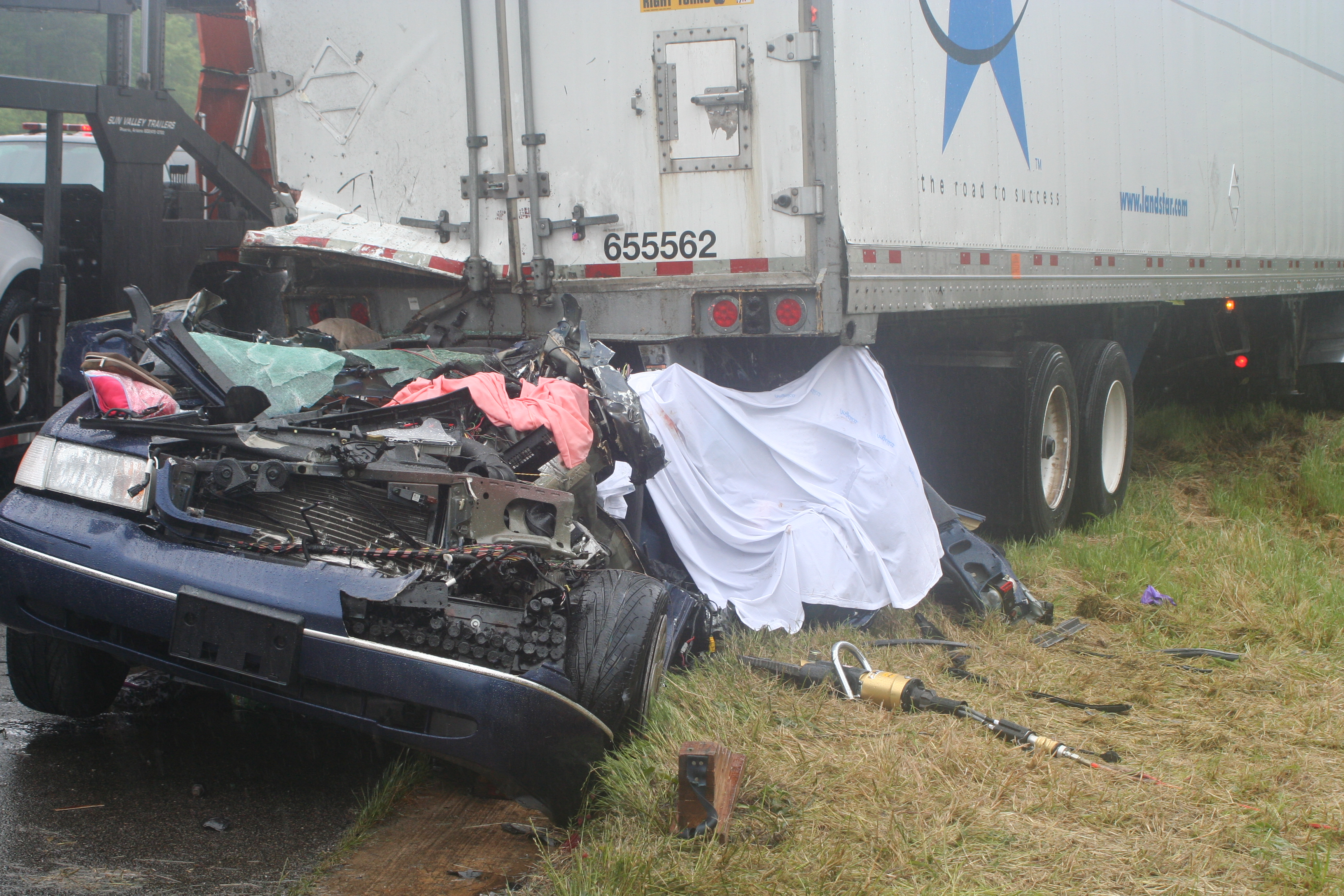
Who will protect the public from vulnerability to vehicle violence?


*CDC: Winnable Battle
Sign the STOP Underrides! Petition here: Congress, Act Now To End Deadly Truck Underride!

When I saw a NHTSA Safety Recall Notice, which Lois Durso had received for a car she owns, I immediately thought, “We should make one of those for trucks!” A month or so later, we did.
Traffic safety measures ranging from seat belt and drunk driving enforcement to design standards for cars and trucks “averted a public health disaster” by preventing about 5.8 million deaths in the U.S. from 1968 through 2015, according to a new study.
The analysis found that without federal and state policies, traffic deaths annually would “likely have been in the hundreds of thousands rather than tens of thousands” in recent years. The report, published in the Journal of Public Health Policy, was by Leon Robertson, an injury epidemiology expert who taught at Yale and Harvard and has written more than 150 research papers and books, many on automotive safety. . .
Read more here: Researcher Says Auto Safety Measures Prevented Millions of Deaths, FairWarning, Christopher Jensen, March 12, 2018
I am thankful for every life saved from the fate of a motor vehicle fatality. However, there are still thousands of lives lost every year to preventable traffic deaths. And this most certainly includes the hundreds (and maybe thousands) of lives lost to Death By Truck Underride, which has been woefully neglected for decades by those who could have done something about it and which negates the safety features of modern cars.
In my book, this is still a major public health problem. And we need to start acting like it is!
Last night, Pres. Obama referred in the past tense to crash fatalities as a public health problem.
